IDR Account Adjustment 2026: Official Timeline & Count Updates
For three years, student loan borrowers waited for a massive fix to their payment histories, officially known as the IDR account adjustment. The Department of Education promised to give retroactive credit for past deferments, forbearances, and lost payments that servicers failed to track.
As of January 2026, the adjustment is officially complete.
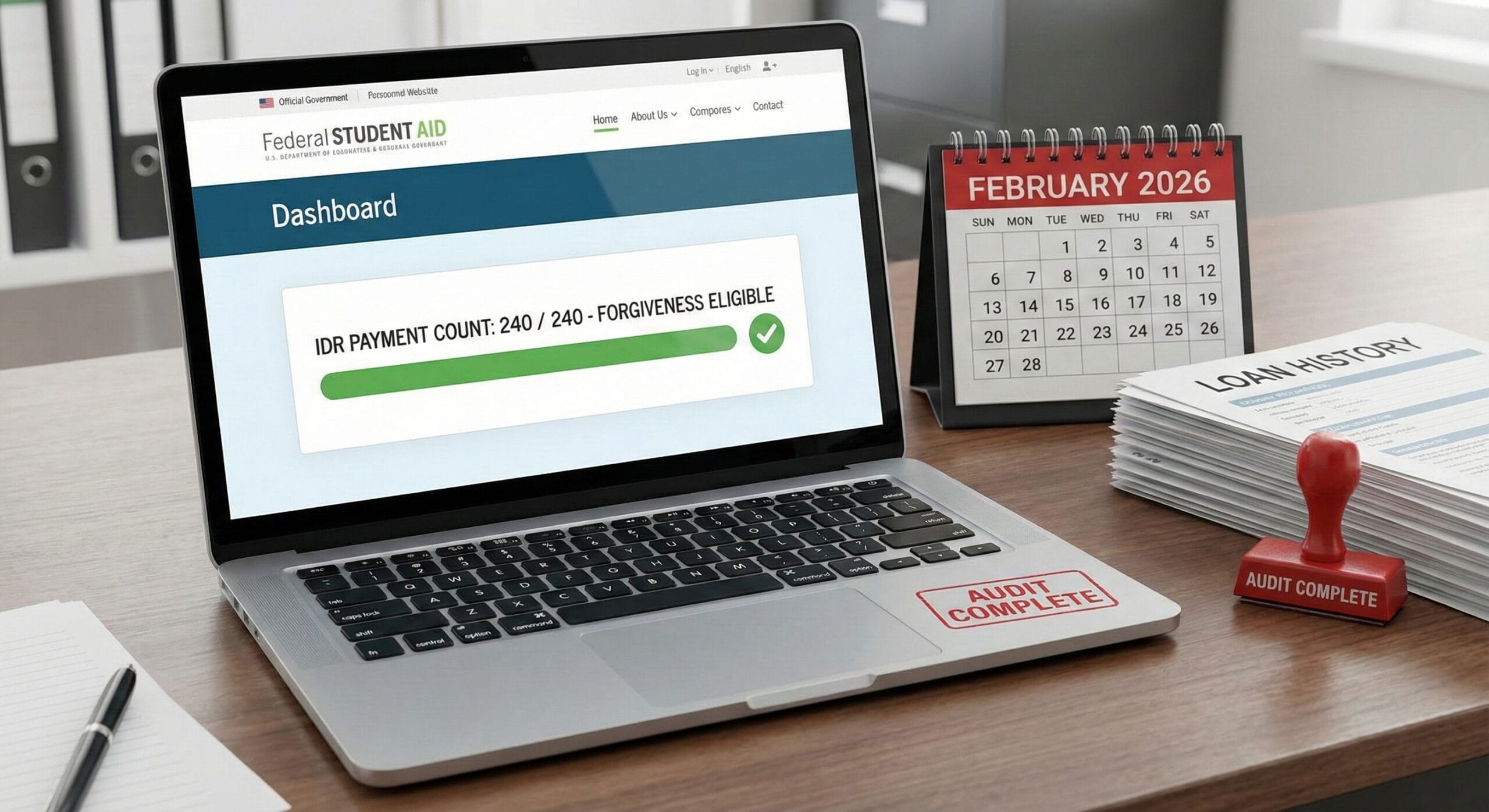
Every eligible Direct Loan account has now been reviewed. If you log into StudentAid.gov today, the “Payment Count” you see is the final result of this massive audit.
For some, this IDR account adjustment brought immediate forgiveness. For others, it brought confusion. If your count is lower than you expected—or if you are “short” by just a few months—this guide explains your next steps in the 2026 repayment landscape, including the new “RAP” plan rules taking effect this summer.
The IDR Account Adjustment Timeline: Is It Done?
Yes. The Department of Education finished the final wave of the IDR account adjustment in late 2025.
- 2024: The first waves of forgiveness were sent to those who hit 20 or 25 years immediately.
- Jan 2025: The “complex” cases (consolidated loans, spousal loans, and FFEL conversions) were processed.
- Jan 2026: The final “cleanup” wave was completed, updating counts for borrowers who had partial records.
If you believe your account was skipped, you must file a complaint immediately (see the “Disputing Errors” section below), as the automated system is no longer searching for new files.
How to Check Your IDR Account Adjustment Count
To see the results of your IDR account adjustment, do not rely on your loan servicer’s website (MOHELA, EdFinancial, etc.). They often display outdated data.
Follow these steps:
- Log in to StudentAid.gov.
- Navigate to your “My Aid” dashboard.
- Click on “View Details” for your active loan.
- Look for the “IDR Forgiveness Progress” tracker.
You will see a number (e.g., 230 qualifying payments). This is your official count toward the 240 (20 years) or 300 (25 years) needed for forgiveness.
- Undergraduate Loans: Forgiveness usually hits at 240 payments (20 years).
- Graduate Loans: Forgiveness usually hits at 300 payments (25 years).
What Counted? (The “Green Light” List)
The IDR account adjustment was generous, but it did not count everything. Here is the official breakdown of what was credited to your history:
- Any Repayment Status: Regardless of payment plan or amount.
- 12/36 Forbearance: Any period of 12+ consecutive months or 36+ cumulative months of forbearance.
- Pre-2013 Deferment: All deferment periods before 2013 (except In-School Deferment).
- Economic Hardship: Deferments for economic hardship specifically (even after 2013).
What Did NOT Count:
- In-School Deferment: If you went back to grad school, those years do not count.
- Default: Time spent in default (before Fresh Start) generally does not count.
- Grace Periods: The 6 months after graduation.
What If You Are “Short”? (The Buyback Option)
Many borrowers checked their IDR account adjustment results hoping for a zero balance, only to find they are at 290 payments—just 10 months short.
In 2026, you have two specific options to cross the finish line:
1. The “Buyback” (Hold Harmless) Option
If you have months in your history that still didn’t count (e.g., a specific In-School Deferment or a forbearance that was too short), you may be able to “buy them back.”
- How it works: You pay what you would have owed during those months based on your income at the time.
- Eligibility: This is generally available for months after July 1, 2024, or specific pre-consolidation gaps.
- The Catch: You must submit a “Buyback Request” to the Department of Education. Note that in 2026, the backlog for these requests is currently 3–4 months.
2. Continue Paying on IDR
If you cannot buy back time, you simply need to make payments on an IDR plan for the remaining months. Once you hit 300, forgiveness is automatic.
Urgent: The July 1, 2026 “RAP” Deadline
There is a massive legislative change approaching that affects how you finish your IDR account adjustment journey.
The One Big Beautiful Bill Act (OBBBA), passed in July 2025, created a new repayment plan called the Repayment Assistance Plan (RAP).
- The Rule: Starting July 1, 2026, if you consolidate your loans, you will generally be forced into the RAP plan.
- The Consequence: Old plans like PAYE, ICR, and IBR will be closed to new enrollees. RAP calculates payments based on 1-10% of your Adjusted Gross Income (AGI), which is less favorable for some high-earners than the old discretionary calculation.
Action Item: If you need to consolidate to get the highest payment count (e.g., combining a new loan with an old one), you must apply by April 1, 2026 to ensure the loan is disbursed before the July 1 cutoff.
Parent PLUS Borrowers: The Door is Closing
If you have Parent PLUS loans, the IDR account adjustment was your golden ticket, but the window is shutting. The “Double Consolidation Loophole”—which allowed Parent PLUS borrowers to access cheaper IDR plans—is effectively ending with the new legislation.
If you consolidate after July 1, 2026, Parent PLUS loans will likely be restricted to the “New Standard” or RAP plans, losing access to the older, more flexible options. If you haven’t consolidated yet, speak to a specialist immediately.
Disputing IDR Account Adjustment Errors
Did the IDR account adjustment miss a period of forbearance that should have counted? In 2026, you can file a formal dispute via the FSA Feedback Center.
What you need:
- Proof of the missing period (old bank statements or letters from your previous servicer).
- A clear timeline of the dates in question.
- Reference the specific “12/36 month” rule if applicable.
Warning: Do not stop paying while you dispute. If you stop, you risk delinquency, which removes you from the forgiveness track.
The Tax Implication
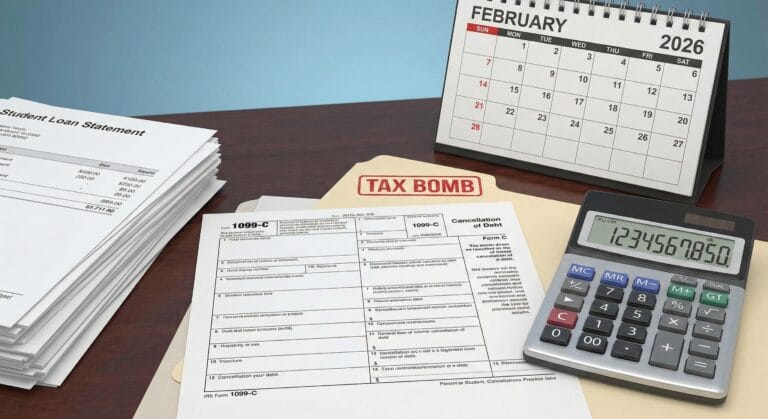
If your IDR account adjustment pushes you over the finish line in 2026, remember the tax rules have changed. Unlike the forgiveness granted in 2024 or 2025, any discharge processed this year is subject to federal taxation because the American Rescue Plan waiver has expired. (See our full guide on the Student Loan Tax Bomb 2026 for details on how to handle the IRS bill).
Summary: The Audit is Over
The era of “waiting for the adjustment” is done. The number on your screen is your reality.
Action Plan:
- Verify: Log in to StudentAid.gov today.
- Watch the Calendar: If you need to consolidate, apply before April 1, 2026.
- Calculate: If you are short, decide if you need to “Buyback” months.
For official updates on processing times, always refer to the Department of Education IDR Page.