Home Insurance Replacement Cost 2026: Are You Underinsured?
If your home burned down today, would your policy cover the full home insurance replacement cost? In 2024, the answer was likely “Yes.” In 2026, for millions of homeowners, the answer is a terrifying “No.”
This is the hidden danger of the 2026 economy. While we have all focused on the price of eggs and gas, a quiet crisis called “Underinsurance” has been building.
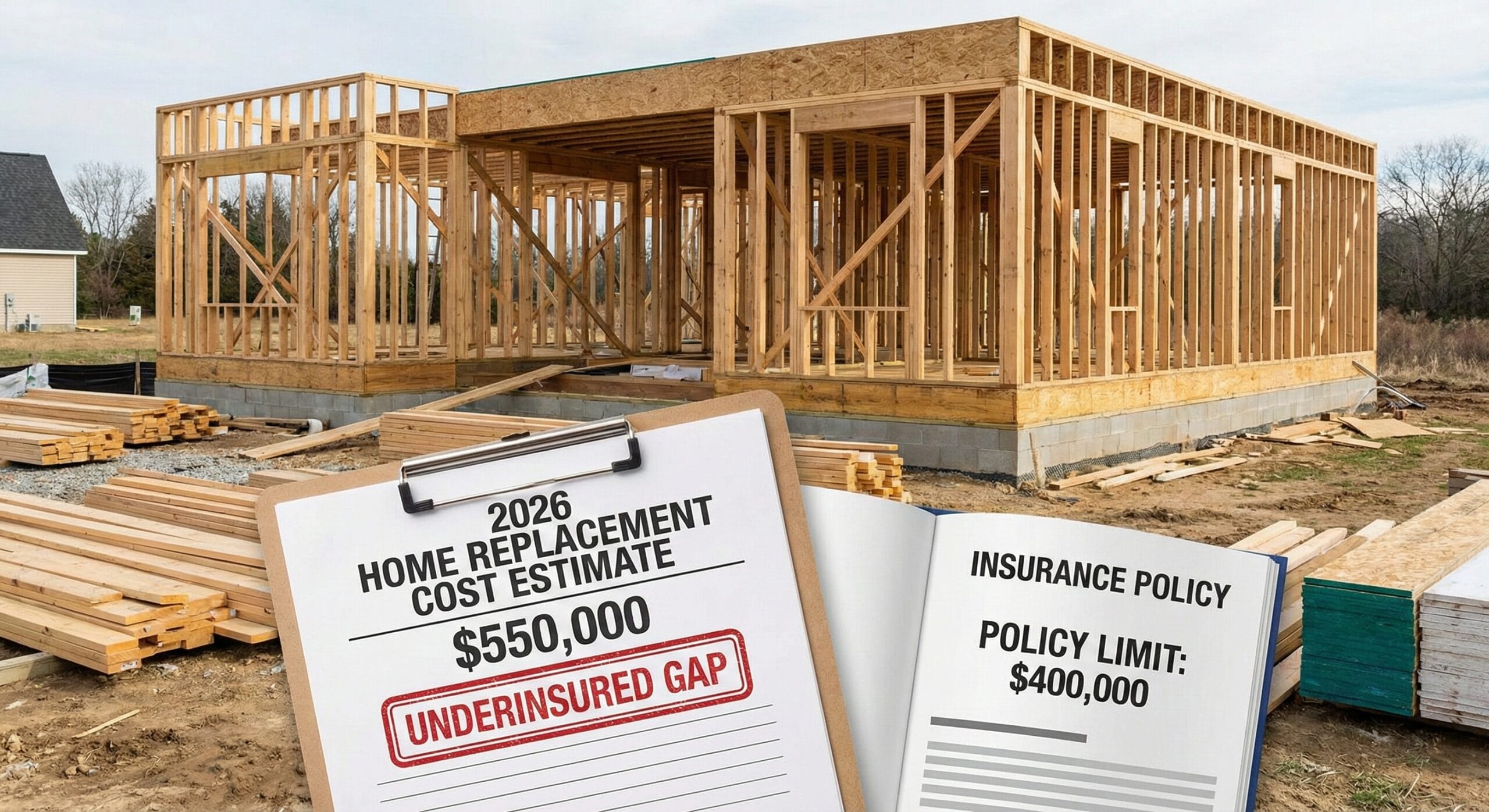
Inflation hasn’t just made groceries expensive; it has skyrocketed the price of lumber, copper, and skilled labor. As a result, the home insurance replacement cost—the actual price to build your house from scratch—has outpaced your policy limits. If you haven’t updated your “Coverage A” (Dwelling Coverage) in the last 18 months, you are likely underinsured by tens of thousands of dollars.
Market Value vs. Home Insurance Replacement Cost
The biggest mistake homeowners make is confusing two very different numbers: “My house is worth $400,000 on Zillow, so I insured it for $400,000.”
In 2026, this logic is dangerous. You must distinguish between:
- Market Value: What someone will pay for your home (land included).
- Home Insurance Replacement Cost: What a contractor charges to clear debris and build a new home.
In many parts of the U.S., the real estate market has cooled, but construction costs have risen. You could have a home with a market value of $350,000 that requires a home insurance replacement cost of $450,000 to rebuild. If you insure for the market value, you will come up $100,000 short.
Why Home Insurance Replacement Cost is Up in 2026
Why is the cost to rebuild so high this year? It isn’t just one thing; it is a “perfect storm” of three factors hitting the construction industry at once:
1. The Labor Shortage
The construction industry is currently facing a massive deficit. According to recent 2026 industry reports, the U.S. is short roughly 350,000 construction workers.
- The Impact: When labor is scarce, wages go up. Hiring a framer or electrician costs about 15% more today than it did two years ago.
2. Material Volatility
While the price of lumber has stabilized, other materials have surged.
- Concrete & Roofing: Prices have risen 8–12% this year due to manufacturing consolidations.
- Copper & Wiring: Green energy demand is using up the world’s copper supply, making electrical work significantly more expensive.
3. Code Upgrades
If you rebuild an older home in 2026, you cannot rebuild it “like it was.” You must meet current building codes. This means thicker insulation, hurricane straps, and energy-efficient windows.
The “Roof Trap”: ACV vs. Home Insurance Replacement Cost
One of the sneakiest ways insurers are lowering their risk in 2026 is by changing how they cover roofs. You need to check your policy declarations page immediately for a specific acronym: ACV.
- Replacement Cost Value (RCV): The insurer pays for a brand-new roof, regardless of age.
- Actual Cash Value (ACV): The insurer only pays for what your old roof was worth the day it died.
The Scenario: You have a 15-year-old roof. A storm destroys it. A new roof costs $20,000.
- With RCV: The insurer writes you a check for $19,000 (minus deductible).
- With ACV: The insurer says your roof was 75% “used up.” They write you a check for only $5,000. You have to pay the remaining $15,000.
The Solution: Extended Home Insurance Replacement Cost
To protect yourself against rising home insurance replacement cost, look for one of these two endorsements:
1. Extended Replacement Cost (Good)
This pays your policy limit plus an extra percentage if costs surge.
- Example: Your limit is $400,000. Costs hit $480,000. With a “25% Extended” endorsement, the insurer pays up to $500,000.
2. Guaranteed Replacement Cost (Best)
This is the gold standard. It promises to rebuild your home regardless of the cost, even if it doubles your policy limit.
- The Catch: In 2026, fewer insurers offer this because the risk is so high. If you can find it (often with carriers like Chubb, Erie, or Auto-Owners), buy it.
Summary: Managing Home Insurance Replacement Cost
Adding “Extended Replacement Cost” to your policy typically costs about $50 a year. Compare that to the risk of being $50,000 short after a fire. It is the best money you will spend in 2026.
Your Action Plan:
- Check Coverage A: Ask your agent to run a new estimator based on 2026 labor rates.
- Audit Your Roof: Check if your coverage has switched to “Actual Cash Value” (ACV).
- Add the Buffer: Ensure you have at least “25% Extended Replacement Cost.”
For a deeper dive on how inflation is impacting insurance trends, you can read the latest report from the Insurance Information Institute.
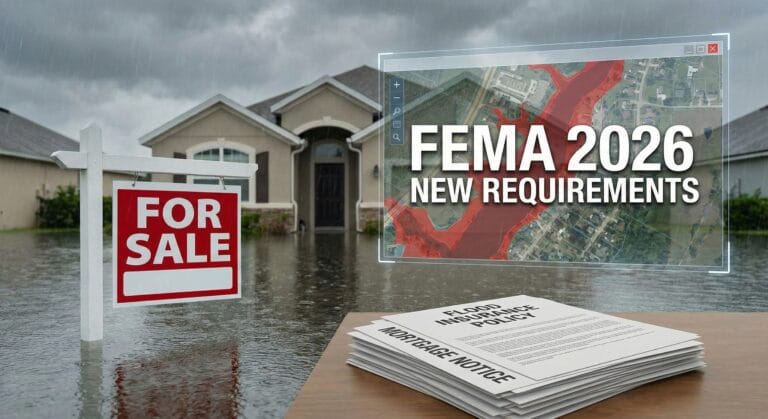
If you are updating your home policy, you should also check your flood risk. Even if you aren’t near the ocean, new maps might require you to have coverage. Read our guide on Flood Insurance Requirements 2026 to stay compliant.



beton delme