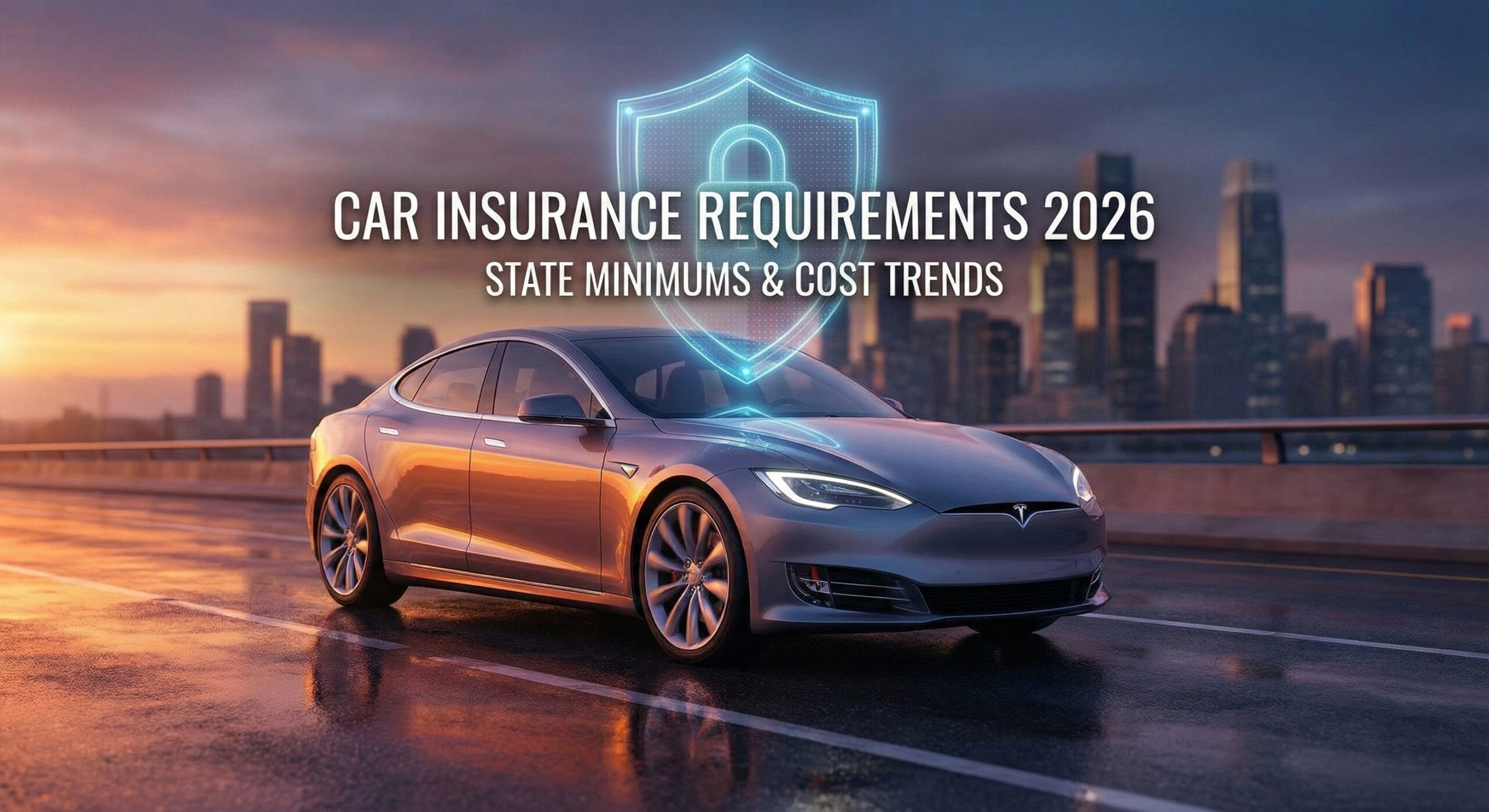
Car Insurance Requirements 2026: State Minimums & Cost Trends
Driving without insurance isn’t just risky; in most states, it is illegal. But understanding Car Insurance Requirements can be confusing. Do you need “Full Coverage”? What is “Liability”? And why are rates going up in 2026?
This guide breaks down the state minimums you must have by law, the coverage you should have to protect your finances, and how to save money in a rising market.
1. What Are “State Minimum” Requirements?
Almost every state requires drivers to carry Liability Insurance. This is the foundation of car insurance requirements. It covers the damage you cause to other people, but never your own car. It typically includes two parts:
- Bodily Injury Liability: Pays for the medical bills of the other driver or passengers if you cause an accident.
- Property Damage Liability: Pays for repairs to the other person’s car or property (e.g., a fence, guardrail, or building).
⚠️ The Danger of Minimums:
State minimums are often dangerously low. For example, California’s minimum property damage limit is only $5,000. If you hit a modern luxury car worth $80,000, insurance will pay the first $5,000, and you will be personally responsible for the remaining $75,000. This is why sticking to the minimums is a financial gamble.
2. Car Insurance Requirements by State: Fault vs. No-Fault
Understanding Car Insurance Requirements depends heavily on where you live. The biggest difference is between “Tort” (Fault) states and “No-Fault” states.
- Tort States (e.g., California, Texas): The driver who caused the accident pays for everything. If you are hit, you file a claim against the other driver’s insurance.
- No-Fault States (e.g., Florida, Michigan, New York): Regardless of who caused the crash, your own insurance pays for your medical bills (under “Personal Injury Protection” or PIP). This usually makes insurance much more expensive in these states.
State Spotlight:
- Florida: Requires PIP ($10,000) and Property Damage ($10,000) but surprisingly does not require Bodily Injury liability for most drivers.
- Texas: Follows the “30/60/25” rule ($30k per person, $60k per accident, $25k property).
- New York: Has strict requirements including PIP, Liability, and Uninsured Motorist coverage.
3. Recommended vs. Minimum Coverage
Financial experts universally recommend carrying more than the legal minimum. If you own a home or have savings, you are a target for lawsuits.
| Coverage Type | State Minimum (Avg) | Recommended Level |
| Bodily Injury (Per Person) | $25,000 | $100,000 |
| Bodily Injury (Total) | $50,000 | $300,000 |
| Property Damage | $15,000 | $100,000 |
4. Full Coverage vs. Liability Only
Do you need “Full Coverage”? That term isn’t a specific policy, but rather a combination of Liability plus two optional protections for your car:
- Collision: Pays to fix your vehicle if you hit another car or object.
- Comprehensive: Pays for non-accident damage, such as theft, hail, fire, flooding, or hitting a deer.
The Deductible Dilemma: $500 vs. $1,000
When you choose Collision or Comprehensive, you must pick a “deductible.” This is the amount you pay out-of-pocket before the insurance kicks in.
- Low Deductible ($250 – $500): You pay less if you crash, but your monthly premium will be higher.
- High Deductible ($1,000 – $2,000): You take more financial risk if you crash, but your monthly premium will be significantly lower.
Rule of Thumb: If your car is worth less than $4,000, consider dropping full coverage. You would likely pay more in premiums over a few years than the insurance company would ever pay you for the car’s value.
5. 2026 Car Insurance Cost Trends
Insurance rates have spiked in 2026. Why?
- Vehicle Tech: Modern bumpers have sensors, cameras, and radar, making simple fender-benders incredibly expensive to repair.
- Climate Events: Increased storms, hail, and floods have led to more total-loss claims across the country.
- Medical Inflation: As hospital bills rise, bodily injury payouts get larger, forcing insurers to raise premiums.
6. 5 Proven Ways to Lower Your Premium
If the 2026 rates are hurting your wallet, use these strategies to meet Car Insurance Requirements for less money.
- Bundle Policies: Buying Home/Renters and Auto insurance from the same company is the easiest way to save (usually 10-15%).
- Telematics (Usage-Based): Let the insurer track your driving via an app. If you don’t speed or brake hard, you can save up to 30%.
- Improve Your Credit: In most states, raising your credit score from “Fair” to “Good” can drop your rate by hundreds of dollars per year.
- Ask for Discounts: Ask about “Good Student,” “Defensive Driver,” or “Low Mileage” discounts. They are often not applied automatically.
- Shop Every 6 Months: Insurance companies often “price creep” loyal customers. Comparing quotes twice a year ensures you never overpay.
💸 Managing a tight budget? Check our Mortgage Calculator Guide 2026 to see how insurance impacts your monthly costs.
7. Common Questions (FAQ)
Is car insurance mandatory in every state?
Every state except New Hampshire and Virginia requires it. However, even in those states, you are personally financially responsible for any damage you cause, so driving uninsured is extremely dangerous.
What happens if I drive without insurance?
You face license suspension, vehicle impoundment, fines up to $1,000, and potential jail time. Plus, if you cause a crash, you can be sued for your future wages and assets.
Does my credit score really affect my rate?
Yes. Statistical data shows that drivers with lower credit scores file more claims. Therefore, insurers in most states charge higher premiums to offset that risk.
Summary: Meeting Car Insurance Requirements
Don’t just buy the cheapest policy you find. Meeting the basic Car Insurance Requirements keeps you legal, but upgrading to 100/300/100 limits keeps you safe. Review your policy, raise your deductible if necessary, and compare quotes to ensure you aren’t overpaying in this rising market.